Beaumont, CA • Drain Snaking & Cabling
Drain Snaking & Cabling in Beaumont, CA
A drain snake, or cable, is the tool for a clog that sits past the sink, deep in the drain line. We run cables through kitchen and household drains across Beaumont, break through the blockage, and test the flow after the run.
24/7 emergency line • Local Beaumont coverage • Clear diagnosis first
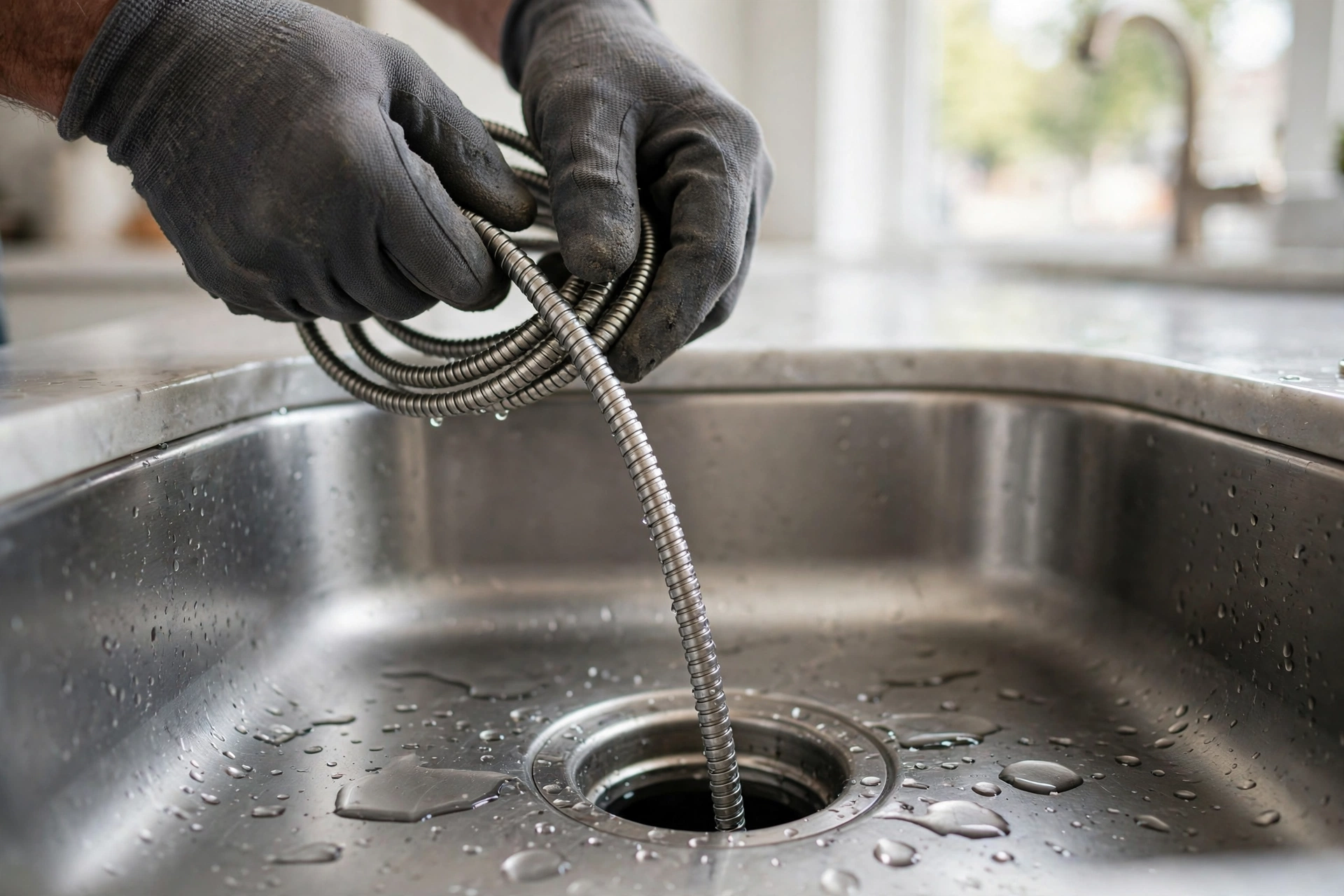
Drain snaking, also called cabling, is the work of feeding a flexible steel cable into a drain line, turning it to break through a clog, and pulling the clogged material out or pushing it through to a larger line. It is the tool for a clog that sits past the sink, where a plunger cannot reach and where the blockage is too hard for water alone to move. Of all drain methods, snaking has the strongest record of calls that turn into completed work, because it solves the clog it is used on.
Snaking starts with the access point, not the clog. The cable enters the drain through the trap, through a cleanout outside the house, or through the roof vent where no cleanout exists. The access point decides how far the cable can reach and how much of the line it can work. A visit chooses the access point first, then runs the cable to the clog and tests the drain after the run.
What Drain Snaking Is
A drain cable is a long flexible steel line with a cutting head on the end, fed into the drain by hand or by machine and turned as it goes. The turning head breaks through the clog, scrapes buildup from the pipe walls, and lets water flow again. Different heads fit different clogs: a small head for a soft plug of grease, a larger cutting head for packed food and scale, and a spiral head that pulls material back out of the line.
Snaking is not the same as pushing a blockage further down the pipe. A cable run that only punches a hole through a clog leaves the rest of the buildup in place, and the drain slows again within days. A proper cable run works the full length of the clogged section, scraping the pipe walls as it goes, so the drain carries a full flow after the run. The flow test at the end is what shows whether the run worked.
When a Snake Is the Right Tool
A snake is the right tool when the clog sits past the sink and a plunger has not moved it. Both sides of a double sink backed up together, a sink that drains slowly no matter how it is plunged, and a drain that backs up when the dishwasher runs are all signs of a clog past the sink, in the branch line. The cable reaches that clog where a plunger cannot.
A snake is also the right tool for a clog that keeps returning. A drain cleared with a plunger and slow again within weeks has buildup on its walls, and a cable run scrapes that buildup off as it works through the line. A drain that has been plunged twice and still drains slowly is asking for a cable, not a third plunge.
A snake is not the right tool for every drain fault. A drain that is slow because the pipe itself is damaged, or because the line has settled and holds standing water, will not stay clear after a cable run. A camera look inside the pipe shows whether the problem is a clog or the pipe, and the snaking page and the camera inspection page work together on that question. Call Beaumont Kitchen Sink Pros at (951) 555-0100 and describe what the drain is doing, and we will connect you with an available local crew right away.
What the Cable Finds
The cable finds the clog by feel and by what it brings back. A soft clog of grease gives way gradually, and the head comes back coated in grease. A hard plug of coffee grounds and food gives way suddenly, and the head comes back packed with material. A clog of scale gives way in flakes, and the head comes back with hard pieces. Each one tells the technician what the line is carrying and how the pipe walls look behind the clog.
Sometimes the cable finds something that is not a clog at all. A cable that stops against a solid object may have found a piece of broken pipe, a joint that has shifted, or an object that fell down the drain. A cable that passes the clog easily but the drain still flows slowly may have found a line that holds standing water because it has settled. Both findings change the job from clearing to repair, and the drain pipe repair page covers what happens next.
After the Snake: Testing the Drain
After the cable run, the drain is flushed and the tap is run at full flow. The basin should empty fast and stay empty, without gurgling and without the water level rising again. The other fixtures in the house are checked too, because a clog in a shared line can show up at the shower or the toilet once the kitchen drain is clear. A drain that passes the flow test at the sink but backs up at the shower still has a clog further down the line.
The water is run long enough to confirm the flow holds, not just for a few seconds. A drain with buildup left on its walls will flow for a short time and then slow again as the water carries loose material back into the narrowed section. Running the tap for several minutes shows whether the line is truly clear or only partly clear.
What a Drain Snaking Visit Covers
- Access point chosen first: trap, cleanout, or roof vent.
- Cable run through the clogged section, scraping the pipe walls as it goes.
- Clogged material identified from what the cable brings back.
- Drain flushed and run at full flow to test the line.
- Other fixtures checked, because a shared-line clog shows up elsewhere.
- Camera look where the clog keeps returning or the cable reports damage.
Frequently Asked Questions
What is drain snaking?
Drain snaking feeds a flexible steel cable into the drain line and turns it to break through a clog, scrape buildup from the pipe walls, and restore flow. It is the tool for a clog that sits past the sink, where a plunger cannot reach.
When does a drain need a snake instead of a plunger?
When the clog sits past the sink in the branch line, when both sides of a double sink are backed up together, or when a drain has been plunged twice and still drains slowly. Those patterns point to a clog a plunger cannot reach.
Will snaking damage my drain pipes?
A cable run is matched to the pipe and the clog: the head and the speed are chosen for what the line is made of and what the clog is. A camera look first shows whether the pipe is sound enough for a cable run.
How long does a drain stay clear after snaking?
A cable run that scrapes the pipe walls clear keeps a drain flowing until new buildup forms, which takes months of normal use. A drain that slows again within days still has buildup on its walls or a damaged pipe, and needs a camera look.
My sink is backed up and needs a snake. What should I do first?
Stop running the tap, bail standing water into a bucket, and note whether one side or both sides are backed up and whether other fixtures are involved. Those details show where the clog sits and which access point the cable will use.
What happens if the cable finds a damaged pipe?
The visit changes from clearing to repair. The camera shows the damage, and the drain pipe repair page covers the work of fixing a cracked, corroded, or shifted section of pipe.
Kitchen Sink Unclogging in These Beaumont Neighborhoods
This service is available across Beaumont, including:
- Kitchen Sink Unclogging in Fairway Canyon, Beaumont, CA
- Kitchen Sink Unclogging in Seneca Springs, Beaumont, CA
- Kitchen Sink Unclogging in Oak Valley, Beaumont, CA
- Kitchen Sink Unclogging in Highland Springs, Beaumont, CA
Related Services
From the Blog
How to Prevent Kitchen Sink Clogs
Call (951) 555-0100 and we'll connect you with an available local crew right away.
Sink Not Draining in Beaumont?
Describe the clog — standing water, a slow drain, or a disposal that will not turn — and get a clear plan for getting it flowing again.
Call (951) 555-0100