Beaumont, CA • Blog
How to Prevent Kitchen Sink Clogs
A kitchen sink clog is easier to prevent than to clear. The habits in this guide take a few seconds each, and together they keep a drain clear for far longer than any one of them alone.
24/7 emergency line • Local Beaumont coverage • Clear diagnosis first
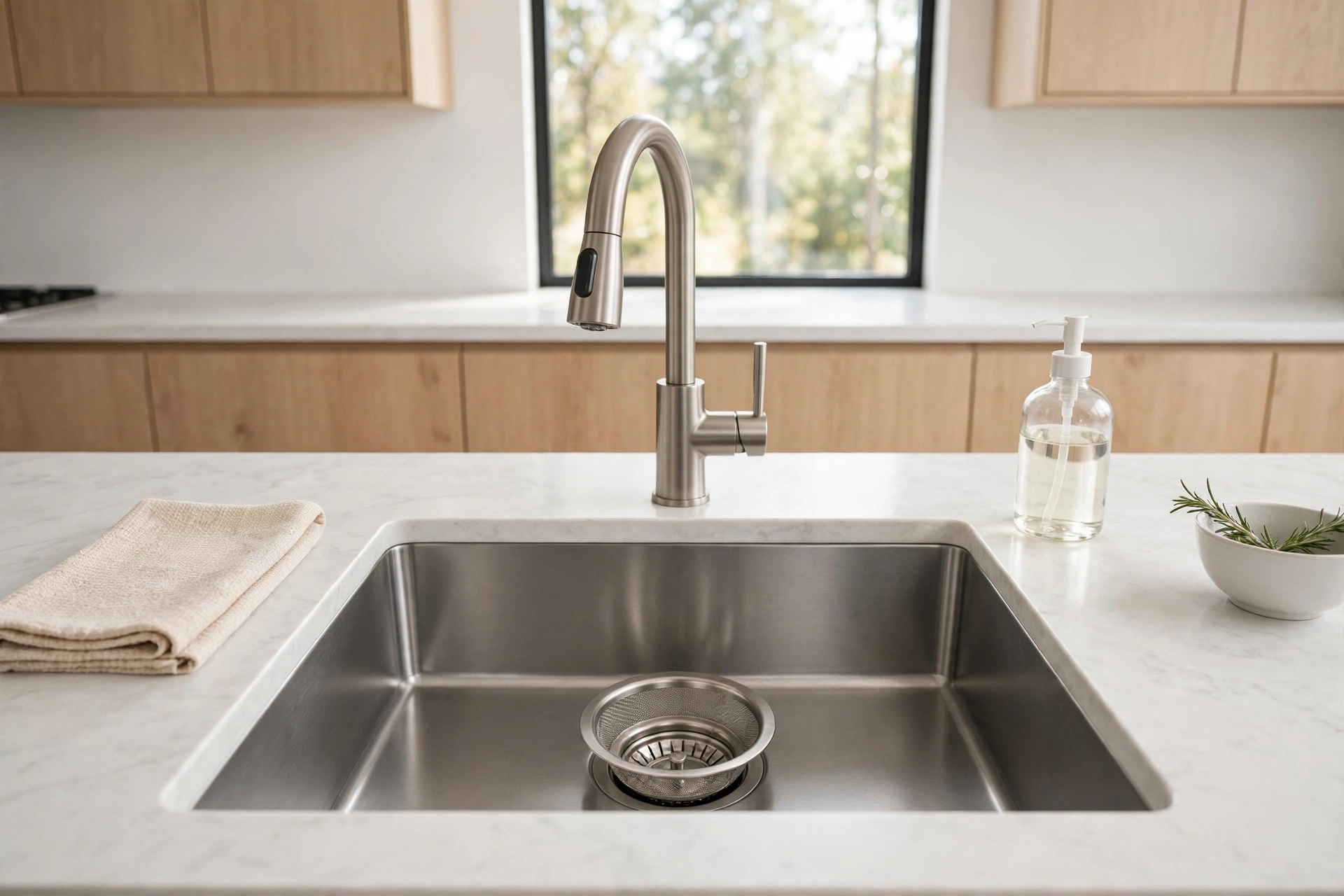
A kitchen sink clog is easier to prevent than to clear. The habits that keep a drain clear take a few seconds each, and they cost nothing: scraping plates, using a strainer, keeping grease out of the drain, and putting coffee grounds in the bin. A drain that is looked after in those small ways stays clear for months longer than a drain that is not, and the clog that finally forms is a smaller job than the clog that forms in a drain nobody looks after.
This guide covers the habits in the order they matter: what goes down the drain, how the disposal is used, what to do with grease, and the checks that catch a slow drain early. It also covers the habits that do not help, so time is not spent on work that makes no difference. None of these habits needs a product, a tool, or a visit. They need a few seconds at the sink, repeated every day.
Scrape Plates and Use a Strainer
Scraping plates into the bin before washing is the single habit that does the most to keep a kitchen drain clear. Food scraps that never go down the drain cannot clog it, and a plate scraped clean leaves only a thin film for the wash water to carry away. It takes a few seconds per plate, and it removes the largest single source of material that clogs a kitchen drain.
A strainer in the sink catches what scraping misses. A fine mesh strainer over the drain opening stops food, grounds, and small pieces from entering the pipe, and it is emptied into the bin after each wash. A strainer that is left in place and never emptied becomes a clog of its own, so the habit is to empty it every time the sink is used, not once a week.
The two habits work together: scraping keeps the large pieces out, and the strainer keeps the small pieces out. A kitchen that does both puts almost no solid food down the drain at all, and the pipe carries only water, soap, and the thin film left after scraping. That is a drain that stays clear for a long time.
Grease Belongs in the Bin, Not the Drain
Cooking grease is the main cause of kitchen sink clogs, and keeping it out of the drain is the habit that matters most after scraping plates. Pour cooking oil, bacon fat, and butter into a container, let it cool and harden, and put the container in the bin. A jar kept by the stove for used grease makes the habit easy: pour, cool, bin, and the drain never sees the grease at all.
Hot water does not make grease safe to pour down the drain. Hot water melts the grease and carries it a little further down the pipe, where it cools and hardens again on the pipe walls. The grease ends up in the pipe either way, only further down, where it is harder to reach. Running hot water after washing up helps carry fresh grease further down the line before it cools, but it does not remove grease that is already in the pipe.
Wipe a greasy pan with a paper towel before washing it. The towel takes the bulk of the grease into the bin, and the wash water carries only a thin film. It is a small step, and it removes more grease from the drain than any amount of hot water. A pan wiped clean before washing is a pan that does not coat the pipe.
Coffee Grounds, Rice, and Pasta Go in the Bin
Coffee grounds do not break down in water, so they settle in the drain and pack into a dense plug. Put coffee grounds in the bin or the compost, not the drain, whether they come from a drip machine, a French press, or a pour-over filter. A spoonful of grounds down the drain each morning adds up over months, and the plug grows in the trap or in a narrowed section of pipe where the water slows.
Rice and pasta swell in water and lodge in a narrowed pipe, so they belong in the bin even though the disposal can grind them. A handful of rice down the disposal becomes a swollen mass in the drain past the unit, and pasta does the same. Starchy foods are a quiet cause of clogs, because each serving on its own seems too small to matter, and the buildup is gradual.
Fibrous vegetables like celery, artichoke, and onion skins wrap around the disposal plate instead of grinding, and they belong in the bin too. Bones, fruit pits, and shells will jam the disposal outright. The rule is simple: if it is hard, fibrous, starchy, or gritty, it goes in the bin, not the drain.
Using the Disposal the Right Way
The disposal is built for small soft food scraps, fed slowly with cold water running. Run cold water before switching the disposal on, feed the scraps a little at a time, and keep the water running for a short time after the grinding stops, so the ground food clears the trap and the drain line beyond it. Cold water matters: it keeps grease solid so the disposal can grind it and the water can carry it away, while hot water melts grease and lets it coat the drain past the disposal.
Do not feed the disposal a full plate at once. The disposal grinds a little at a time, and a large amount of food at once will jam it, even if each piece on its own is fine. Feed it slowly, listen for the grinding to finish before adding more, and let the water run after. A disposal used that way clears small scraps without trouble and lasts longer than one that is fed in bulk.
A disposal that hums but will not turn is jammed, and the fix is to switch it off, clear the jam, and turn the plate by hand until it moves freely. Do not keep switching a jammed disposal on and off, because the motor strains against the jam and can burn out. The garbage disposal repair page covers disposal faults in full.
Monthly Checks That Catch a Slow Drain Early
A monthly check takes a minute and catches a clog before it closes the drain. Run the tap at full flow and watch how fast the basin empties. A drain that empties fast is clear. A drain that empties slowly, gurgles, or leaves water standing in the basin has a clog forming, and the earlier it is caught, the smaller the job to clear it. Note the speed each month, because a drain that empties a little slower each month is narrowing, even if it still drains.
Smell is the second check. A drain that smells when the disposal runs, or when hot water goes down, has food and grease sitting in the pipe and breaking down. The smell appears before the drain stops altogether, and clearing the buildup now is a smaller job than clearing a full blockage later. A drain that smells and drains slowly together needs attention the same week, not the same month.
If a drain slows despite these habits, the buildup is deeper than habits alone can reach, or the pipe itself is damaged. A camera look inside the pipe shows the walls and whether the problem is grease, scale, or a damaged section, and the cleaning is planned from what the camera shows. Call Beaumont Kitchen Sink Pros at (951) 555-0100 when a drain slows and stays slow, and we will connect you with an available local crew right away.
Frequently Asked Questions
What is the easiest way to prevent kitchen sink clogs?
Scrape plates into the bin before washing, use a strainer in the sink, and pour cooking grease into a container for the bin instead of the drain. Those three habits keep the largest sources of clogs out of the pipe.
Can I pour grease down the drain if I run hot water with it?
No. Hot water melts the grease and carries it further down the pipe, where it cools and hardens again on the pipe walls. The grease ends up in the pipe either way, only further down.
Should I run hot or cold water with the garbage disposal?
Cold water. Cold water keeps grease solid so the disposal can grind it and the water can carry it away, while hot water melts grease and lets it coat the drain past the disposal.
Do coffee grounds clog kitchen drains?
Yes. Coffee grounds do not break down in water, so they settle in the drain and pack into a dense plug. Put coffee grounds in the bin instead.
How often should I check my kitchen drain?
Once a month, run the tap at full flow and watch how fast the basin empties. A drain that empties a little slower each month is narrowing, and catching it early makes the clearing a smaller job.
Related Services
Kitchen Sink Unclogging in These Beaumont Neighborhoods
- Kitchen Sink Unclogging in Sundance, Beaumont, CA
- Kitchen Sink Unclogging in Seneca Springs, Beaumont, CA
More from the Blog
- What to Do When Your Kitchen Sink Will Not Drain
- What Causes Kitchen Sink Clogs in Beaumont Homes
- Warning Signs Your Kitchen Drain Is About to Clog
- Does Homeowners Insurance Cover Drain Cleaning?
Call (951) 555-0100 and we'll connect you with an available local crew right away.
Sink Not Draining in Beaumont?
Describe the clog and get a clear plan for getting it flowing again.
Call (951) 555-0100