Beaumont, CA • Blog
What to Do When Your Kitchen Sink Will Not Drain
A kitchen sink that will not drain stops the whole kitchen. These are the checks to run first, in the order a technician follows them, and the point where the job needs a visit.
24/7 emergency line • Local Beaumont coverage • Clear diagnosis first
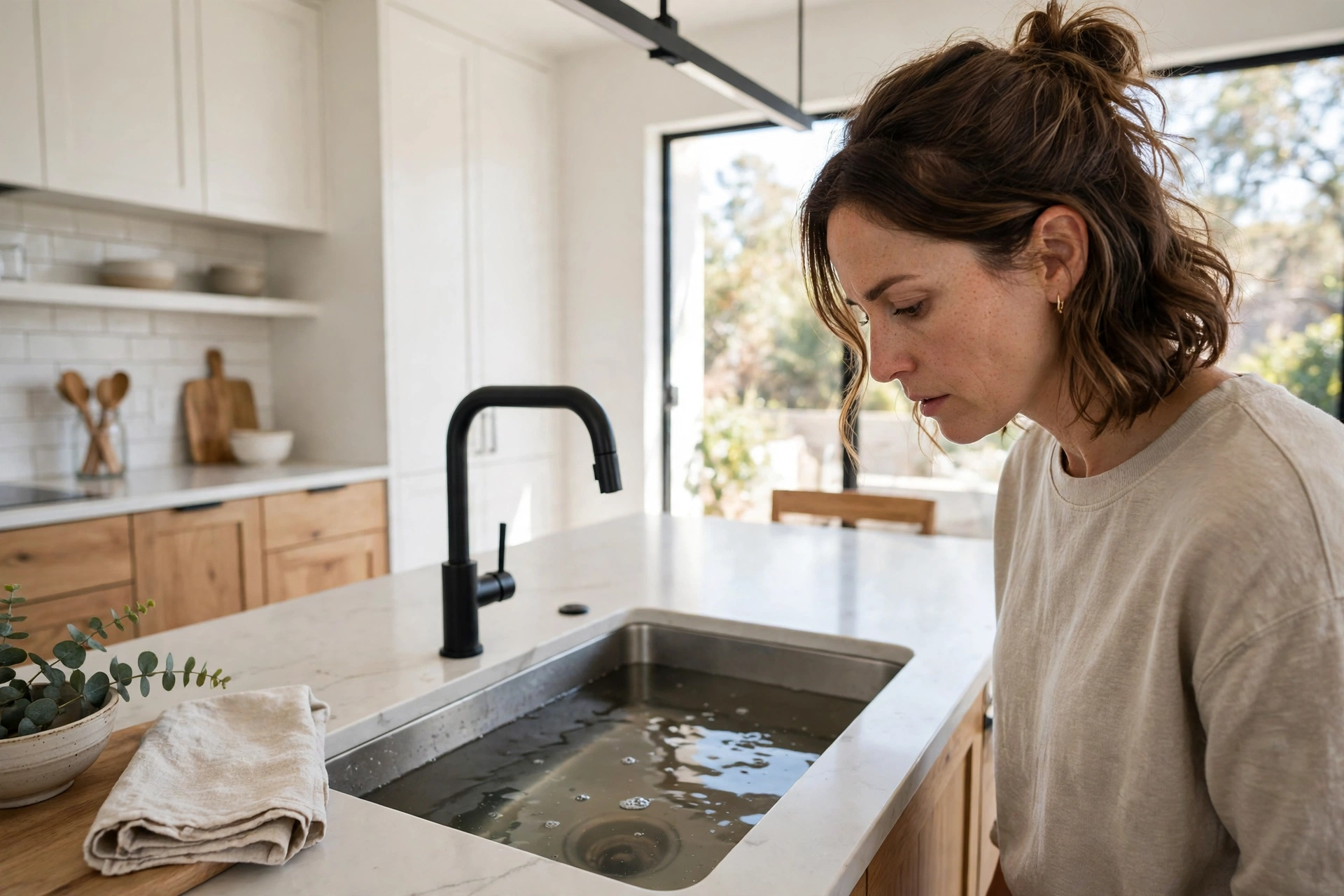
A kitchen sink that will not drain is one of the most disruptive faults a home can have. Dishes pile up, water stands in the basin, and the smell from a drain that is not clearing spreads through the house. The fault usually has a simple cause, and the checks below work through the causes in order, from the easiest to the hardest, so a homeowner can tell what kind of clog they have before they call.
This guide walks through those checks: what the water is doing, whether one side or both sides are affected, what the disposal is doing, and what to try before calling. It also marks the line between a clog that can be cleared at home and a clog that needs a visit, so you know when to stop. Some of these checks take a few minutes. Others need tools and a trained hand, and the guide marks that line clearly.
Stop the Water and Look at What It Is Doing
The first step with a sink that will not drain is to stop running the tap. Every litre that goes down a blocked drain raises the level in the basin and can push water into the cabinet below. Turn off the tap, turn off the dishwasher if it is running, and do not flush the toilet again until the cause is known, because the toilet drains into the same system and adds water to a blocked line.
Bail the standing water into a bucket and pour it outside or into a drain that is still working, not back into the sink. Clear what you can reach from the basin: food scraps, a strainer full of debris, and anything sitting in the drain opening. A sink that is full of water hides the drain, and the checks that follow need the basin clear enough to see what the water does when it is run again.
Now look at what the water does. Run a small amount of water and watch. If it stands in the basin and does not move, the blockage is complete. If it drains very slowly, the pipe is narrowed but not fully closed. If it drains, then rises again when the disposal runs, the clog sits past the disposal connection. Those three patterns point to three different places in the system, and the rest of the checks follow from which one you see.
One Side or Both Sides: The Clue That Matters Most
The most useful check with a double-basin kitchen sink is whether one side or both sides are backed up. Each side of the sink has its own drain down to a shared pipe, so when one side drains and the other does not, the clog is in the one side. When both sides back up together, the clog sits past the point where the two sides join, in the shared drain line. That distinction matters, because a clog in the shared line will not clear with a plunger on one basin.
A clog past the kitchen sink can also show up away from the sink. Water may rise in the sink when the dishwasher runs, because the dishwasher drains through the same line. The sink may gurgle when a toilet flushes, or drain slowly after a shower, because the fixtures share a drain that is partly blocked. Note whether any other fixture is involved, and in what order the problem appeared, because the fixture that backed up first is usually the closest to the clog.
Write the pattern down before you call. One side or both sides, which fixtures are involved, and when the problem started are the three facts a technician needs to plan the visit. A visit that starts with those facts starts at the right place instead of at the beginning, and the clog is found faster.
Check the Disposal Before You Reach for the Plunger
The disposal sits in the drain path of the kitchen sink, so a disposal fault looks like a drain clog. Switch the disposal on and listen. A disposal that hums but will not turn is jammed, usually by a bone, a fruit pit, or fibrous vegetables wrapped around the grinding plate. A disposal that does nothing at all has no power or a failed motor. A disposal that runs normally while the sink still will not drain has a clog past the unit, not in it.
A jammed disposal is cleared by switching it off, clearing the jam, and turning the plate by hand from below until it moves freely, then switching it back on with cold water running. Do not keep switching a jammed disposal on and off: each time the motor strains against the jam, it draws current and heats up, and a motor forced against a jam can burn out. Switch it off, leave it off, and clear the jam before switching it on again.
Some disposals have a reset button on the bottom of the unit, and a jam that trips the overload will reset once the jam is cleared and the button is pressed. Check the wall switch and the breaker too, because a disposal with no power at all is a different fault from a jammed one. The garbage disposal repair page covers disposal faults in full, including leaks at the unit and what not to put in it.
What a Plunger Can Do, and What It Cannot
A plunger is the first tool for a soft clog close to the sink, in the trap under the basin. It works by pushing water against the blockage and pulling it back, and a few firm plunges can clear a soft plug of food and grease. Use a sink plunger with a flat cup that seals over the drain opening, and block the overflow or the second basin with a wet cloth so the pressure goes into the drain rather than out of the other side.
A plunger will not clear a hard clog deep in the line, and forcing water through a hard clog can push the blockage further down the pipe, where it is harder to reach. If a few firm plunges do not move the water, stop: the clog needs a cable run, not more plunging. A drain that moves a little with the plunger and then stops again has a partial clog that the plunger cannot reach, and the next step is a visit.
Do not pour a chemical drain cleaner down a sink that will not drain. A chemical cleaner sitting in standing water does not reach the clog, and it leaves a caustic liquid in the basin that the technician then has to deal with. A cleaner poured into a drain that is already blocked can also sit in the pipe and damage the seals. Bail the water out and leave the drain alone until the clog is found.
When to Call, and What to Tell the Technician
Call when the sink will not drain after the checks above, when both sides of a double sink are backed up together, when water comes up in another fixture, or when the drain has clogged again a few weeks after it was cleared. Each of those patterns points to a clog past the sink, a clog in a shared line, or a pipe that is damaged, and each one needs a visit rather than another round of plunging.
When you call, share the facts you gathered: whether one side or both sides are backed up, whether other fixtures are involved, what the disposal does when it is switched on, and when the problem started. Those details tell the technician where the clog sits and which access point the work will use, so the visit starts at the right place. Call Beaumont Kitchen Sink Pros at (951) 555-0100 and describe what the sink is doing, and we will connect you with an available local crew right away.
After the visit, the sink should drain fast and stay fast. Run the tap at full flow and watch how fast the basin empties. If it drains fast and stays fast, the clearing held. If it slows again within days, the buildup was deeper than the clearing reached, or the pipe itself is damaged, and a camera look inside the pipe is the next step. A repeat clog is information about the pipe, and the camera is what reads it.
Frequently Asked Questions
Why will my kitchen sink not drain at all?
The clog is usually in the trap under the sink, in the disposal, or in the first stretch of drain pipe past the wall. Grease, food scraps, coffee grounds, and soap residue build up on the pipe walls until water cannot pass.
Both sides of my sink are backed up. What does that mean?
The clog sits past the point where the two sides of a double sink join, in the shared drain line. A plunger on one basin will not clear it, because the blockage is beyond the sink itself.
Can a plunger clear a kitchen sink that will not drain?
A plunger can clear a soft clog close to the sink, in the trap. It will not clear a hard clog deep in the line, and forcing water through a hard clog can push the blockage further down the pipe.
My disposal hums but will not turn. Is that why the sink will not drain?
Yes, often. A jammed disposal will not pass water, so the sink backs up behind it. Switch the disposal off, clear the jam, and turn the plate by hand until it moves freely before switching it on again.
Should I use drain cleaner on a sink that will not drain?
No. A chemical cleaner sitting in standing water does not reach the clog, and it leaves a caustic liquid in the basin that the technician then has to deal with.
Related Services
Kitchen Sink Unclogging in These Beaumont Neighborhoods
- Kitchen Sink Unclogging in Cherry Valley, Beaumont, CA
- Kitchen Sink Unclogging in Sundance, Beaumont, CA
More from the Blog
- What Causes Kitchen Sink Clogs in Beaumont Homes
- How to Prevent Kitchen Sink Clogs
- Warning Signs Your Kitchen Drain Is About to Clog
- Does Homeowners Insurance Cover Drain Cleaning?
Call (951) 555-0100 and we'll connect you with an available local crew right away.
Sink Not Draining in Beaumont?
Describe the clog and get a clear plan for getting it flowing again.
Call (951) 555-0100